
After this coronavirus pandemic, our lives and the way we interact in society will never be the same. Our idea of holidays will change and face limits it didn't have before. Summer brings the peak holiday and tourism season. Transport will adapt to this new normal, and so will the hotels we stay in, with measures such as electronic locks, distancing and hand sanitiser gels.
The associations behind the reopening.
Several organisations are working on the new measures, such as the Spanish Hospitality Association, the Spanish Tourism Quality Institute, the Spanish Association for Occupational Risk Prevention, as well as several trade unions and hotel chains.
Everyone is doing their bit to draw up the best possible plan for a proper reopening. The different situations and characteristics of each hospitality business have been taken into account so they can adapt as well as possible.
From phase 1 of the easing of restrictions, on 11 May, many hotels were already able to reopen. Below we explain what the new hotel experience will be like from now on.
Hotel reception
What just a few months ago was the first point of contact with the hotel, with receptionists and people coming and going, will now look different. The way hotel entry and exit is controlled will change.
Onity's OnPortal system combines software and hardware to manage this process, allowing check-in and check-out to be controlled even from a mobile device, avoiding contact between receptionist and guest.
Mobile phones can also be used as electronic keys in combination with RFID electronic locks, such as Onity's DirectKey system, a very effective solution so that guests don't have to use keys or cards that usually pass through many hands.
Where possible, contactless body thermometers could be used as a further step to guarantee everyone's safety. The most sensible rule, echoed by all the proposals, is extreme cleaning and sanitising of the hotel, contact areas, tables, doors, desks, even pens and anything else necessary.
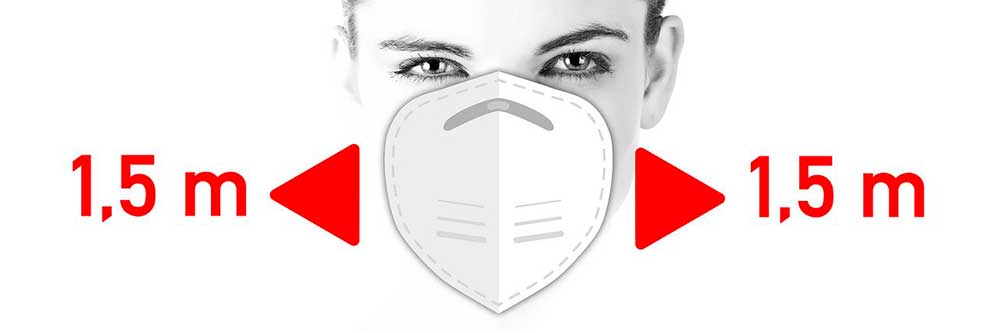
Masks will have to be worn at all times, and disposable gloves are recommended, especially if help is needed with luggage, along with disinfectant wipes.
Common areas
Common areas where many people used to gather for any reason, such as lifts, corridors or the restaurant, will also be controlled, particularly their capacity.
Hygiene measures
- Hand sanitiser gel dispensers will be available to guests, especially in corridors, as an extra protective measure in the busiest areas.
- Disinfectant wipes for cleaning handles, grips and pulls.
- Gloves and masks, which will be part of our daily lives.
- Removal of towels, a possible source of infection.
- Regular cleaning of soap, gel and paper dispensers, as well as buttons, knobs, phones, switches and anything guests interact with.
Lifts
Lift capacity will be limited to one person at a time, although members of the same family may ride together. Lift buttons and panels will be disinfected, although gloves are always recommended
Restaurants and buffets
Depending on the phase of the easing of restrictions, capacity will vary from 30% on terraces to 50% indoors. Safe distances between tables will be respected, and shared items such as sauce boats and oil and vinegar cruets will not be used.
Buffets as we knew them will disappear. Meals will be served in single portions, and contact between waiters and guests will be avoided. One problem that could arise is an increase in plastic waste if the situation continues. This is where sustainable solutions and eco-friendly alternatives for hotels could solve the problem in the long term.
The schedule of these services will be adapted to avoid crowds that could lead to infections. Access will not be free but by appointment. In hotels, breakfast will be brought to the room and left outside for contactless delivery.
Gym
Gyms will also have access control by appointment and set usage times for users. Capacity will also be reduced to guarantee a minimum distance, and machines will be disinfected after use.
Swimming pools
As Álvaro Carrillo, director of the Hotel Technology Institute, says, swimming pools can be used, as properly chlorinated water acts as a disinfectant. The most effective measure would be controlling capacity and opening hours. However, in Spain they will not be allowed to open until phase 3.
Rooms and room service.
Hotel staff must follow a series of rules to guarantee everyone's safety and hygiene. Masks will be mandatory for staff. In rooms, sheets, blankets and pillows will be replaced with properly sealed ones, and room service, such as breakfast, will have to be contactless.
New cleaning protocols will be set, with textiles washed at more than 60°C. All items the hotel considers essential will be disinfected, and hotels may choose whether to provide pedal bins in rooms.
Décor will be as minimalist as possible: all non-essential items will be removed from rooms, as they are usually handled by several people. Those that remain must be properly disinfected.
A new hotel experience
These rules are already being applied in several hotels in various European countries. This is not a local or temporary measure, much less a bump in the road, but a turning point in our social behaviour. It's a "new normal", a new experience and way of interacting that, in this case, is reflected in hospitality and tourism.


