
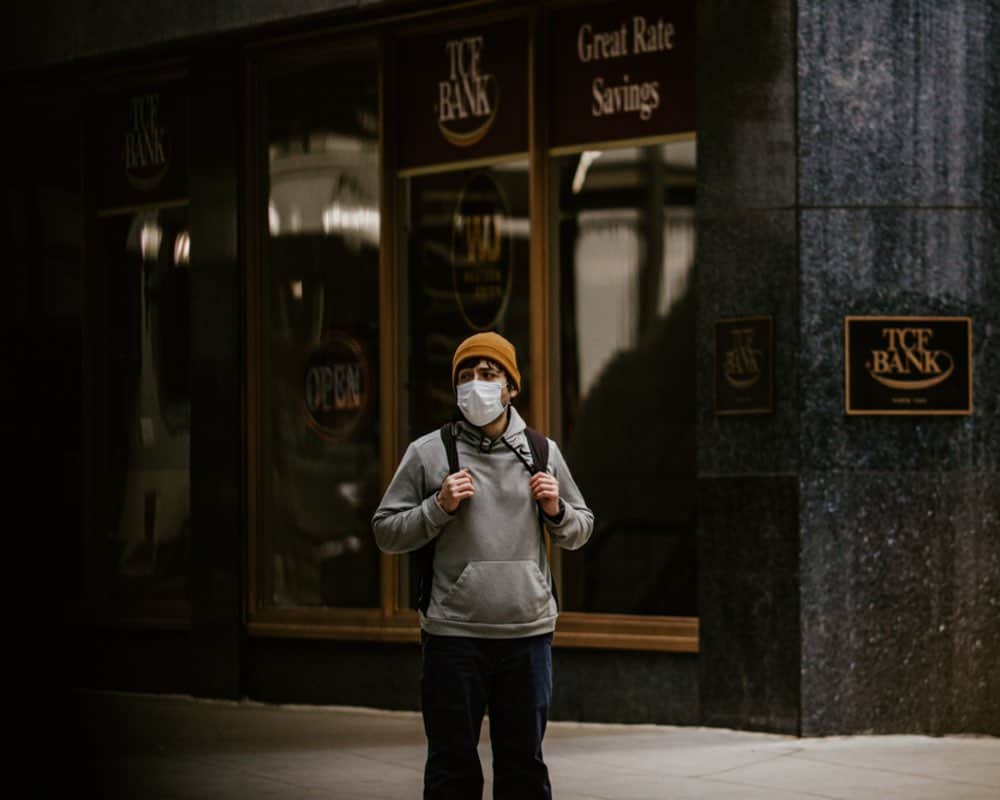
One of the most effective measures against the coronavirus pandemic is social isolation. However, many people still have to leave home to meet obligations, do tasks, go to work or even do the shopping.
That's why people are still worried about possible indirect infection from other people, especially through objects, materials and surfaces used regularly by several people every day.
Even if we take every precaution with gels and masks, we will still come into contact with areas where the virus could be present. How long COVID-19 can survive outside a living organism is one of the most frequently asked questions.
Presence of COVID-19 in the air
A recent study by Spain's National Research Council (CSIC) concludes that this virus can remain in the air for up to 3 hours. Meanwhile, Linsey Marr, a scientist at Virginia Tech, told The New York Times that it is "unlikely" that a droplet small enough to float in the air could settle on clothing, due to aerodynamics.
She explains that as people move, they push small droplets and particles in the air around them, unless they are large enough not to be moved by the air current.
Health Ministry data on COVID-19 and surfaces
On 4 April, the Spanish Ministry of Health updated its scientific and technical report on COVID-19, including a section on the transmissibility and persistence of the virus on different surfaces.
It specifies the following times on these surfaces at a temperature of 21-23°C and 40% relative humidity:
- Copper: 4 hours
- Cardboard: one day
- Stainless steel: two days
- Plastic: three days
In the case of paper, letters and newspapers, it's best to leave them for at least 24 hours as a precaution before handling them. Money, however, can carry the virus for up to 4 days.
Risks of coronavirus infection
The WHO explains that the main cause of infection is physical contact, with the virus concentrated in particles of saliva, coughs or sneezes.
People tend to touch their faces between 2,000 and 3,000 times a day, a habit that can lead to infection after exposure to contaminated situations and surfaces.
Safety measures in hotels

Given these facts, one of the best ways to guarantee the safety of both staff and guests is to avoid unnecessary contact with objects and to disinfect continuously.
Technology can help here. It gives us Onity electronic locks , which allow rooms and doors to be opened without direct contact.
These electronic locks are also available on in-room safes . Guests who use them will benefit from double protection and security:
- For their valuables. Onity safes with electronic locks are more secure than traditional ones as they use an encoded combination.
- For those who use them. These safes can be opened without touching other surfaces that could carry infection.
To reach the "new normal", both businesses and users must listen and take every available safety measure so we can go about our daily lives with peace of mind.


